
Composite chemical hoses are high-performance hoses specifically designed for conveying a variety of corrosive and hazardous liquid or gaseous chemical media. They are made by continuously winding multiple layers of thermoplastic film, chemical-resistant fabric reinforcement, and inner and outer spiral steel wires.
Composite chemical hoses offer lightweight construction, excellent flexibility, and broader chemical compatibility, making them widely used in chemical, petroleum, pharmaceutical, electroplating, shipbuilding, and tank truck loading/unloading industries.
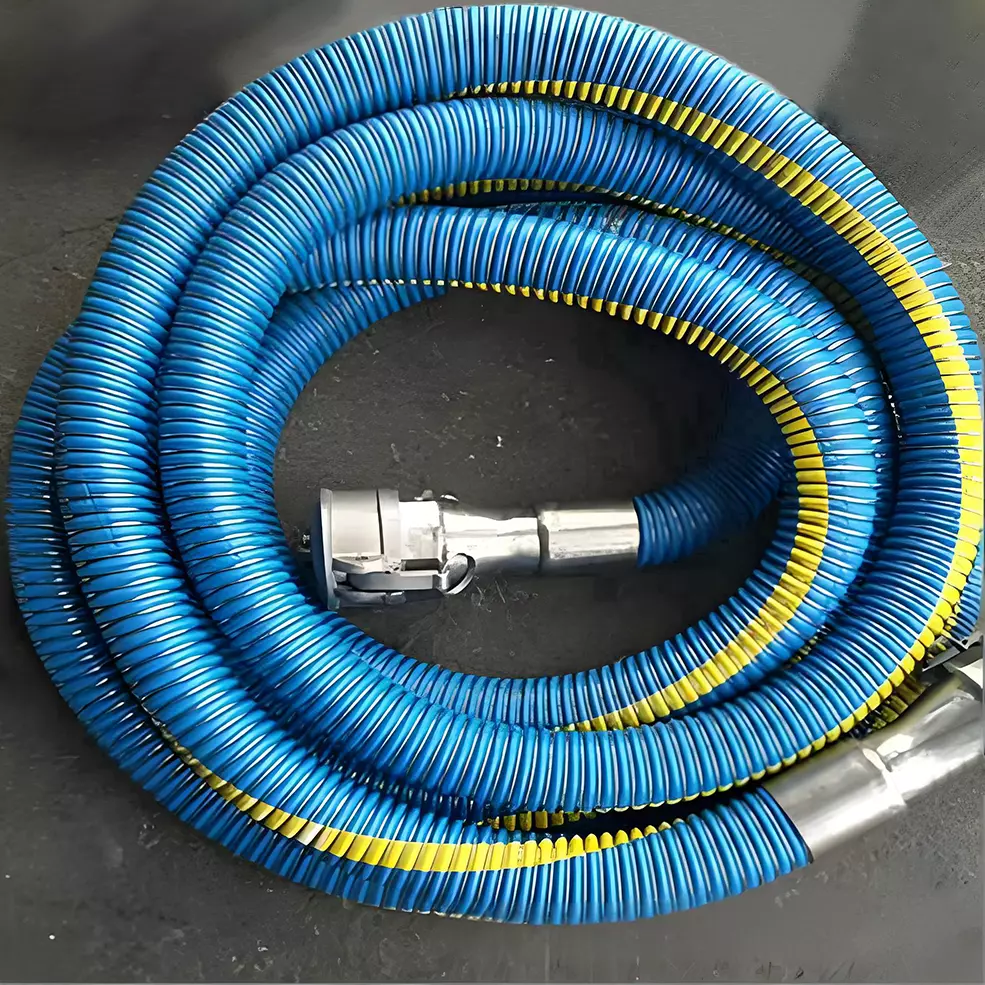
SSE Composite Chemical Hose
Constructure:
Inner Wire: Stainless Steel 316L(S)
Outer Wire: Stainless Steel 316L(S)
Tube: Polypropylene (E)
Cover: PVC Coated Polyester Cloth
Standard: EN 13765:2010
Temperature Range: -30℃ a +100℃
Safety Factor: 4 :1
Vacuum: 0.9 bar
Application:It is suitable for conveying a variety of chemicals and has good acid and alkali corrosion resistance. It can
convey media such as acids, fatty acids, alkalis and solvents, even in corrosive environments. It is suitable for loading and
unloading operations in tank trucks, trucks, chemical plants and chemical ships.
| Code | InsideDiameter | Tolerence | Working Pressure | Bend Radius | Electrical Resistance | ||
| inch | mm | mm | Bar | Psi | mm | (Ω) | |
| Standard Duty | |||||||
| SSE-25 | 1″ | 25 | ±4 | 10/16 | 150/250 | 200 | ≤2.5 ohm/m |
| SSE-38 | 1-1/2″ | 38 | ±4 | 10/16 | 150/250 | 230 | ≤2.5 ohm/m |
| SSE-51 | 2″ | 51 | ±4 | 10/16 | 150/250 | 290 | ≤1.0 ohm/m |
| SSE-63 | 2-1/2″ | 63 | ±4 | 10/16 | 150/250 | 310 | ≤1.0 ohm/m |
| SSE-76 | 3″ | 76 | ±4 | 10/16 | 150/250 | 340 | ≤1.0 ohm/m |
| SSE-102 | 4″ | 102 | ±4 | 10/16 | 150/250 | 430 | ≤1.0 ohm/m |
| Marine or Heavy Duty | |||||||
| SSE-152 | 6″ | 152 | ±4 | 10/16 | 150/250 | 700 | ≤1.0 ohm/m |
| SSE-203 | 8″ | 203 | ±4 | 10/16 | 150/250 | 840 | ≤1.0 ohm/m |
| SSE-250 | 10″ | 250 | ±4 | 10/16 | 150/250 | 940 | ≤1.0 ohm/m |
SGE Composite Chemical Hose
Constructure:
Inner Wire: Stainless Steel 316L(S)
Outer Wire: Galvanized Steel 316L(G)
Inner Lining: Polypropylene(E)
Cover: PVC coated polyester cloth
Standard: EN 13765:2010
Temperature Range: -30℃+100℃
Safety factor: 4:1
Vacuum: 0.9 bar
Application: Generally used to transport a variety of chemicals in non-corrosive environments that react well with PP, such as blood products, fatty acids, alkaline substances, or solvents. Suitable for loading and unloading applications in chemical tankers, trucks, chemical plants, and offshore.
| Code | InsideDiameter | Tolerence | Working Pressure | Bend Radius | Electrical Resistance | ||
| inch | mm | mm | Bar | Psi | mm | (Ω) | |
| Standard Duty | |||||||
| SGE-25 | 1″ | 25 | ±4 | 10/16 | 150/250 | 200 | ≤2.5 ohm/m |
| SGE-38 | 1-1/2″ | 38 | ±4 | 10/16 | 150/250 | 230 | ≤2.5 ohm/m |
| SGE-51 | 2″ | 51 | ±4 | 10/16 | 150/250 | 290 | ≤1.0 ohm/m |
| SGE-63 | 2-1/2″ | 63 | ±4 | 10/16 | 150/250 | 310 | ≤1.0 ohm/m |
| SGE-76 | 3″ | 76 | ±4 | 10/16 | 150/250 | 340 | ≤1.0 ohm/m |
| SGE-102 | 4″ | 102 | ±4 | 10/16 | 150/250 | 430 | ≤1.0 ohm/m |
| Marine or Heavy Duty | |||||||
| SGE-152 | 6″ | 152 | ±4 | 10/16 | 150/250 | 700 | ≤1.0 ohm/m |
| SGE-203 | 8″ | 203 | ±4 | 10/16 | 150/250 | 840 | ≤1.0 ohm/m |
| SGE-250 | 10″ | 250 | ±4 | 10/16 | 150/250 | 940 | ≤1.0 ohm/m |
SST Ống hóa chất composite
Constructure:
Inner Wire: Stainless Steel 316L(S)
Outer Wire: StainlessSteel 316L(S)
Inner Lining: PTFE(T)
Cover: PVC coated polyester cloth
Standard: EN 13765:2010
Temperature Range: -30℃+100℃
Safety factor: 4:1
Vacuum: 0.9 bar
Application: Typically used to transport highly corrosive fluids, due to the compatibility of polytetrafluoroethylene (PTFE) and stainless steel with low concentrations of phosphoric acid, naphtha or nitric acid, it is suitable for loading and unloading chemical tankers, trucks, vegetable oils, and marine chemical applications.
| Code | InsideDiameter | Tolerence | Working Pressure | Bend Radius | Electrical Resistance | ||
| inch | mm | mm | Bar | Psi | mm | (Ω) | |
| Standard Duty | |||||||
| SST-25 | 1″ | 25 | ±4 | 10/16 | 150/250 | 200 | ≤2.5 ohm/m |
| SST-38 | 1-1/2″ | 38 | ±4 | 10/16 | 150/250 | 230 | ≤2.5 ohm/m |
| SST-51 | 2″ | 51 | ±4 | 10/16 | 150/250 | 290 | ≤1.0 ohm/m |
| SST-63 | 2-1/2″ | 63 | ±4 | 10/16 | 150/250 | 310 | ≤1.0 ohm/m |
| SST-76 | 3″ | 76 | ±4 | 10/16 | 150/250 | 340 | ≤1.0 ohm/m |
| SST-102 | 4″ | 102 | ±4 | 10/16 | 150/250 | 430 | ≤1.0 ohm/m |
| Marine or Heavy Duty | |||||||
| SST-152 | 6″ | 152 | ±4 | 10/16 | 150/250 | 700 | ≤1.0 ohm/m |
| SST-203 | 8″ | 203 | ±4 | 10/16 | 150/250 | 840 | ≤1.0 ohm/m |
| SST-250 | 10″ | 250 | ±4 | 10/16 | 150/250 | 940 | ≤1.0 ohm/m |
SGT Ống hóa chất composite
Constructure:
Inner Wire: Stainless Steel 316L(S)
Outer Wire: Galvanized Steel 316L(G)
Inner Lining: PTFE(T)
Cover: PVC coated polyester cloth
Standard: EN 13765:2010
Temperature Range: -30℃+100℃
Safety factor: 4:1
Vacuum: 0.9 bar
Application: Recommended for conveying a variety of chemical products that do not react strongly with PP, such as certain types of acid and alkali solvents, toluene in non-corrosive environments, etc. It is generally suitable for chemical tankers, trucks, chemical plants and offshore loading and unloading.
| Code | InsideDiameter | Tolerence | Working Pressure | Bend Radius | Electrical Resistance | ||
| inch | mm | mm | Bar | Psi | mm | (Ω) | |
| Standard Duty | |||||||
| SGT-25 | 1″ | 25 | ±4 | 10/16 | 150/250 | 200 | ≤2.5 ohm/m |
| SGT-38 | 1-1/2″ | 38 | ±4 | 10/16 | 150/250 | 230 | ≤2.5 ohm/m |
| SGT-51 | 2″ | 51 | ±4 | 10/16 | 150/250 | 290 | ≤1.0 ohm/m |
| SGT-63 | 2-1/2″ | 63 | ±4 | 10/16 | 150/250 | 310 | ≤1.0 ohm/m |
| SGT-76 | 3″ | 76 | ±4 | 10/16 | 150/250 | 340 | ≤1.0 ohm/m |
| SGT-102 | 4″ | 102 | ±4 | 10/16 | 150/250 | 430 | ≤1.0 ohm/m |
| Marine or Heavy Duty | |||||||
| SGT-152 | 6″ | 152 | ±4 | 10/16 | 150/250 | 700 | ≤1.0 ohm/m |
| SGT-203 | 8″ | 203 | ±4 | 10/16 | 150/250 | 840 | ≤1.0 ohm/m |
| SGT-250 | 10″ | 250 | ±4 | 10/16 | 150/250 | 940 | ≤1.0 ohm/m |
Composite Chemical Hose Features
1. Multi-layer Construction
The inner layer uses a chemically compatible thermoplastic film.
The middle layer is reinforced with multiple layers of fiber or fabric.
The outer spiral steel wire provides pressure and vacuum resistance.
The outer protective layer (PVC, TPU, or special polymers) enhances abrasion resistance and weather resistance.
This multi-layer protection structure effectively prevents media penetration, improving safety when transporting hazardous chemicals.
2. Excellent Chemical Resistance
Tolerates hundreds of chemicals, including strong acids, strong alkalis, aromatic hydrocarbons, ketones, esters, fuels, and solvents, making it widely applicable in highly corrosive environments.
3. Lightweight & Flexible
30%–50% lighter than comparable rubber chemical tubing, easy to handle, and suitable for frequent movement.
4. Pressure and Torsion Resistance
The inner and outer spiral steel wire structure provides excellent pressure and torsional resistance.
Full vacuum rating optional.
5. Customizable anti-static type composite hose to avoid spark and explosion risks.
What tubing is chemical resistant?
The key to a hose that can safely transport chemicals lies in the fact that its material must be chemically compatible with the chemicals being transported. Below are four common types of chemical-resistant hoses.
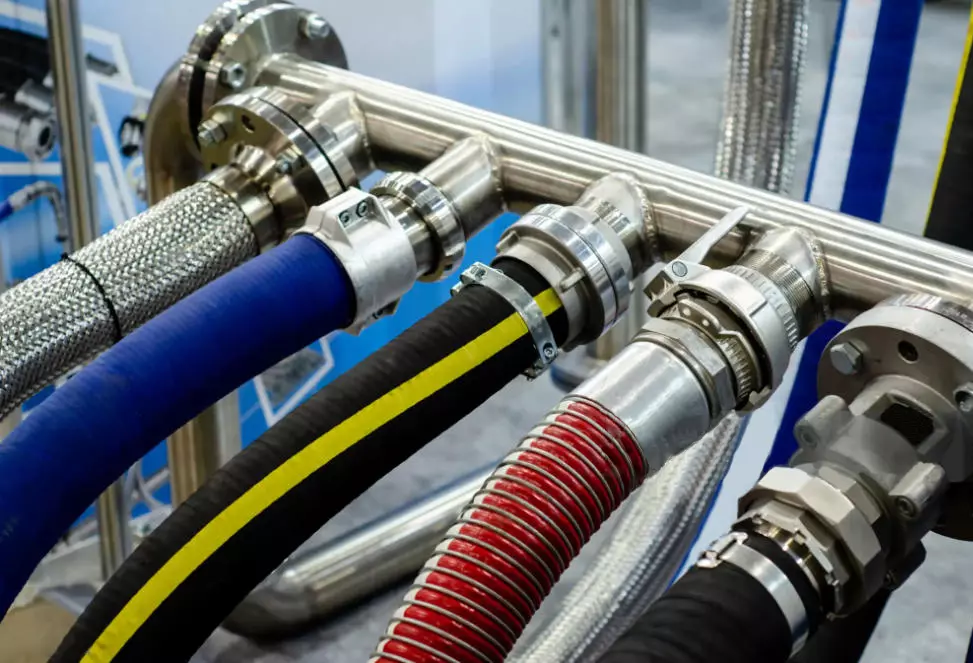
1. Thermoplastic Hoses
- PVC (Polyvinyl Chloride) Hoses: Suitable for mildly corrosive aqueous solutions and some weakly acidic or alkaline chemicals. Not resistant to most organic solvents.
- PU (Polyurethane) Hoses: Excellent abrasion resistance, suitable for abrasive powders or slurries, and also resistant to some oils and chemicals.
- PE (Polyethylene) Hoses: Commonly used in food and drinking water applications, and also for some mild chemicals.
- PTFE/PFA Hoses: A versatile material for conveying strong acids and alkalis.
- EPDM (Ethylene Propylene Diene Monomer): Ozone-resistant, weather-resistant, and resistant to phosphate ester hydraulic oils, especially good at conveying polar chemicals (such as ketones, esters, and alcohols).
- FKM/FPM (Fluororubber): High temperature resistant, resistant to various oils and chemicals, with performance close to Teflon, but more expensive.
3. Metal Flexible Hoses
Stainless steel flexible hoses (usually 304 or 316L stainless steel): High strength, high temperature resistance, pressure resistance, vacuum resistance, and good corrosion resistance (especially 316L, which has better pitting resistance).
4. Composite Chemical Flexible Hoses (the most common and efficient choice)
Combining chemical-resistant materials and pressure-resistant metal materials, composite chemical hoses possess multiple superior characteristics such as flexibility, pressure resistance, and chemical resistance, making them the first choice for the chemical and pharmaceutical industries.
Composite Chemical Hose - Tom Rubber Hose
Composite chemical hoses are high-performance hoses specifically designed for conveying a variety of corrosive and hazardous liquid or gaseous chemical media. They are made by continuously winding multiple layers of thermoplastic film, chemical-resistant fabric reinforcement, and inner and outer spiral steel wires.
Product Brand: Tom Industrial Hydraulic Hose
4.8
 EN
EN  RU
RU  AR
AR  EN_AU
EN_AU  VI
VI  PL
PL  PA
PA  ID
ID  EN_GB
EN_GB  ES
ES  ES_VE
ES_VE  FR
FR